Scissor Lift Selection Guide
Evaluate critical factors like load capacity, working height, and OHS standards when buying a scissor lift.
From active construction sites to logistics warehouses, and from external facade installations to periodic in-plant maintenance, the volume of operations conducted at high elevations is steadily rising. Establishing a secure and highly productive working environment at these heights begins with utilizing the correct personnel lifting systems. Thanks to their robust vertical lifting capacities and highly stable platform designs, scissor lifts remain one of the most trusted equipment families in the industry.
But what exactly is a scissor lift, and which technical specifications must you prioritize to make the right capital investment for your business? This comprehensive guide breaks down the essential criteria—including load capacity, reach height, terrain compatibility, and occupational health and safety (OHS) compliance—to ensure you choose the ideal system.
4 Technical Criteria to Evaluate When Selecting a Scissor Lift
When planning a scissor lift selection, looking solely at the purchase price can lead to major operational bottlenecks and severe safety risks on the job site. Before acquiring any unit, you must meticulously evaluate these four technical foundations:
1. Maximum Working Height
It is vital to distinguish between the maximum platform height (the physical height of the deck when fully extended) and the working height (which adds the average reach of an operator standing on the platform). Calculate the highest elevation your projects demand and choose a model that operates comfortably within its limits without constantly taxing the system's hydraulic bounds.
2. Load Capacity (Safe Working Load)
Compared to articulating boom platforms, scissor lifts provide much larger working decks and significantly higher weight capacities. When calculating your required Safe Working Load (SWL), sum the total weight of the operators, their hand tools, and any heavy installation materials that must be elevated simultaneously.
3. Terrain Structure and Tire Composition
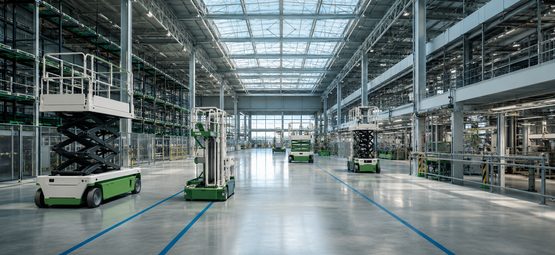
Indoor Applications (Flat Floors): For operations inside factories, warehouses, or commercial centers, select battery-powered electric models equipped with non-marking rubber tires to protect delicate epoxy or concrete floors from damage.
Outdoor Applications (Rough Terrains): For muddy, uneven, or sloped construction yards, choose heavy-duty 4x4 diesel-powered models. These rough terrain lifts feature deep-tread, foam-filled tires, and powerful engines to navigate challenging topographies smoothly.
4. Safety Controls and OHS Standards
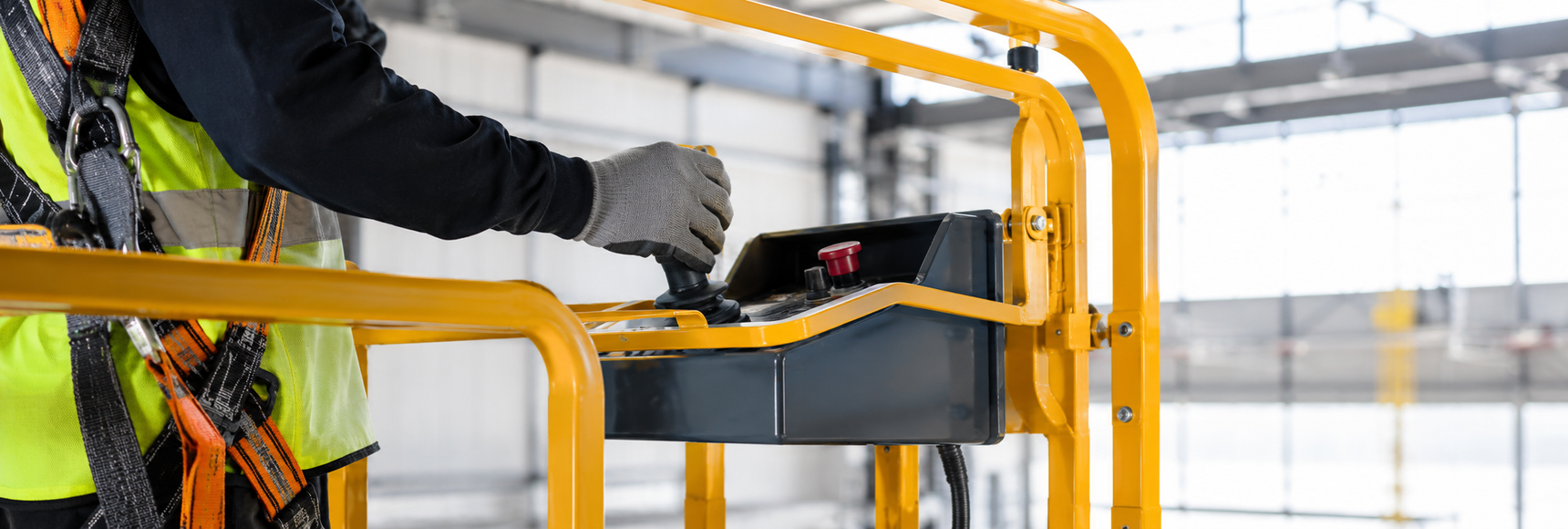
When working at heights, safety is the one parameter where no compromise can ever be tolerated. Your chosen scissor lift must feature modern OHS safety hardware, including tilt sensors with alarms, manual emergency lowering valves, robust platform guardrails, and secure safety harness anchor points. For a detailed breakdown of risk assessment and safety protocols at high elevations, check out our guide to safe working at heights with manlift.
Comparison Table: Electric vs. Diesel Scissor Lifts
|
Technical Feature |
Electric Scissor Lift |
Diesel (Rough Terrain) Scissor Lift |
|
Ideal Work Environment |
Indoor / Smooth, Level Floors |
Outdoor / Rugged Construction Yards |
|
Power Source |
Zero-Emission Electric Battery Packs |
High-Torque Diesel Engines (4x4 Systems) |
|
Noise & Emissions |
Exceptionally Quiet, Zero Gas Emissions |
Higher Noise Levels, Outdoor Exhaust Emissions |
|
Tire Profile |
Non-Marking Solid Rubber Tires |
Deep-Tread, Foam-Filled All-Terrain Tires |
|
Stabilizer Outriggers |
Generally Not Required (Self-Stabilizing) |
Integrated Hydraulic Outriggers for Leveling |
Scissor Lift Pricing and Long-Term Value
When researching scissor lift prices in the industrial market, look beyond the upfront price tag. Consider long-term factors that directly influence your operational costs, such as battery lifespans, chassis durability, hydraulic component quality, and swift access to original spare parts. Investing in uncertified or low-grade platforms can lead to frequent unplanned downtime, costing your business far more in lost productivity.
To elevate safety and efficiency across your facility's high-altitude workflows, explore our robust, certified, and high-performance scissor lift solutions. For alternative aerial work platforms and compact vertical lifting designs, check out our complete manlift category to find the perfect match for your material handling and maintenance teams.