Hydraulic Jack Selection: Capacity Guide
How to choose the right hydraulic jack?
In industrial assembly lines, logistics warehouses, automotive service stations, and heavy machinery workshops, the safest way to lift loads weighing tons with millimeter precision is to harness the power of hydraulic pressure. The most fundamental equipment delivering this immense force to the field is undoubtedly the hydraulic jack. Operating on the principle of fluid incompressibility (Pascal's Principle), these mechanisms multiply human effort to lift and move massive structures vertically.
However, selecting the correct equipment is critical to maintaining high productivity and meeting rigid occupational health and safety (OHS) standards. Choosing an equipment with the wrong capacity or chassis configuration can drastically stall workflows or cause severe workplace accidents.
3 Critical Criteria for Choosing a Hydraulic Jack
When investing in a hydraulic lifting setup for your facility or project, you must outline these technical specifications beforehand:
Maximum Lifting Capacity (Tonnage): The exact weight of the heaviest anticipated load must be clearly calculated. Within Safe Working Load (SWL) boundaries, it is highly recommended to choose a jack with a capacity at least 20% to 30% higher than the total load.
Stroke (Lifting Height) and Closed Height: The collapsed height of the jack must fit perfectly beneath the load's entry clearance, while the maximum extension length (stroke) of the piston must align with your structural lifting goals.
Operating Environment and Duty Cycle: Whether the equipment will work on dusty construction terrains, sterile manufacturing lines, or inside tight machine frames determines the required chassis materials (steel or aluminum) and pump mechanisms.
Types of Hydraulic Jacks Based on Industrial Applications
Different engineering and maintenance requirements demand distinct jack layouts:
1. Bottle Jacks
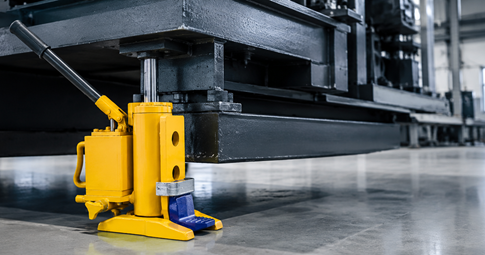
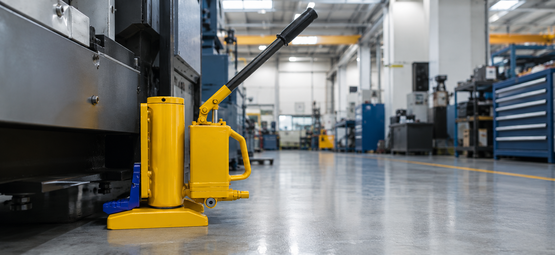
Featuring a vertical cylinder design that resembles a bottle, these classic models deliver compact structures with exceptionally high tonnage lifting capacities.
Usage: They are safely deployed for vertical positioning during heavy vehicle maintenance, structural foundation reinforcement, and heavy construction bracing.
2. Floor Jacks / Trolley Jacks
Engineered with low-profile frames and heavy-duty wheels, these horizontal mechanisms can easily slide beneath low-clearance loads and machinery.
Usage: They are ideal for automotive service centers, rapid tire-changing stations, and lifting machinery that sits very close to the warehouse floor.
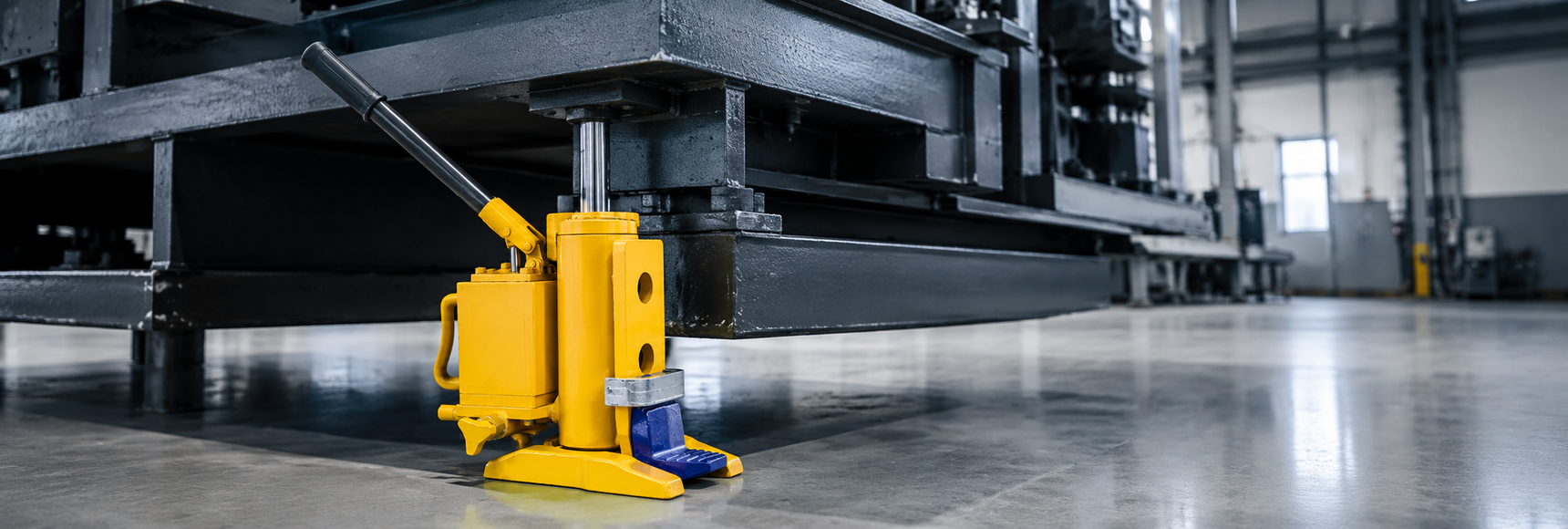
3. Industrial Heavy-Duty and Cylinder Jacks
These are professional industrial jack systems designed to operate in tandem with separate high-pressure hand pumps or electric hydraulic power packs.
Usage: They are preferred for bridge viaduct assemblies, massive block-lifting operations in shipyards, and precision machinery leveling inside factories.
Comparison Table: Jack Configurations and Application Matching
Investment Factors and Secure Procurement
When evaluating jack prices in the industrial market, businesses should look beyond the initial purchase budget and closely assess raw material configurations (such as forged steel bodies), built-in overload safety valves, and high-durability oil seal lifespans. Counterfeit or uncertified hydraulic systems risk fluid leakage or pressure drops under full load, putting your entire operation at risk.
To explore certified, highly durable, and top-tier hydraulic handling systems engineered to meet international safety criteria across your heavy-duty lifting and plant maintenance tasks, explore our hydraulic jack solutions today.