Monorail Crane: What Is It , When to Choose?
Learn the working principles of monorail crane systems, their main differences from overhead traveling cranes for your facility.
In modern production lines and logistics storage facilities, maximizing space utilization, operational speed, and occupational safety are the ultimate keys to success. Instead of increasing forklift or pallet truck traffic on the factory floor, moving material handling processes to the ceiling line saves considerable floor space and minimizes accident risks. Developed precisely for this purpose, monorail crane systems stand out as one of the most effective lifting solutions operating along a single, fixed track.
But what exactly is a monorail crane, what mechanical principles govern its movement, and when should it be preferred over large overhead traveling cranes? In this guide, we have gathered the essential crane selection criteria to optimize the material flow in your facility.
What Is a Monorail Crane and How Does It Work?
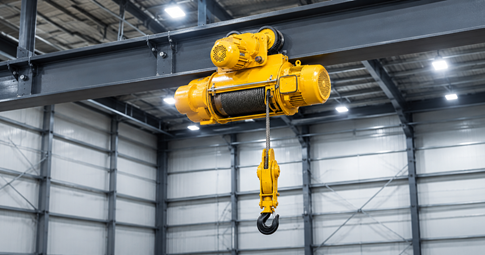
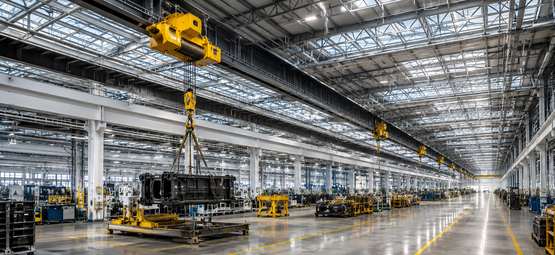
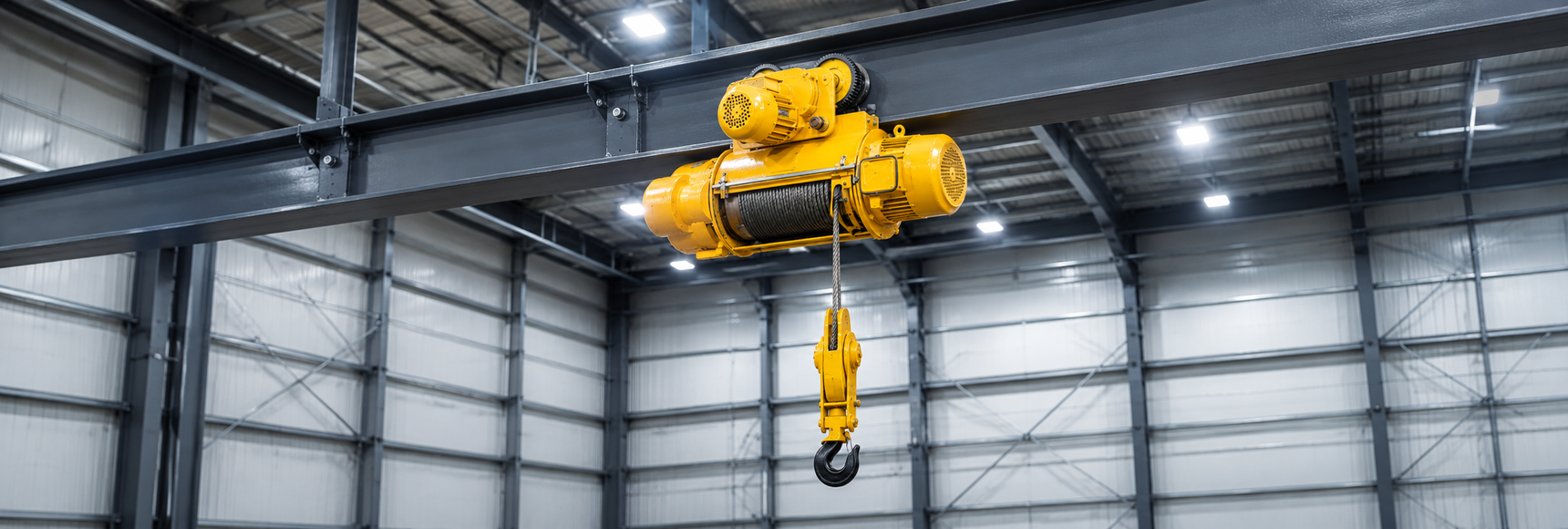
A monorail crane is a lifting equipment that elevates loads vertically and travels horizontally along a single rail track (such as an I-beam or H-beam profile) fixed to the ceiling structure or a specially engineered steel runway framework. The system consists of two primary parts: the lifting unit (hoist) and the motorized trolley mechanism that allows the hoist to move left and right along the rail.
Its working principle is exceptionally straightforward: the operator sends commands to the crane via a pendant cable controller or a wireless radio frequency remote control. The crane lifts the load vertically within safe working load limits and then transports it linearly or along a specifically engineered curved track layout across the monorail rail system.
When Should a Monorail Crane Be Preferred?
Every industrial facility features unique architectural layouts and load-handling scenarios. The ideal conditions to integrate monorail setups into your workflow include:
Handling Along a Fixed, Predetermined Path: It offers unparalleled efficiency in assembly lines, paint shops, or sandblasting stations where materials are picked up from Point A and transferred to Point B following a strict, unvarying route.
Restricted Floor Space or Narrow Aisles: In compact production cells where ground-based material handling equipment cannot easily maneuver, it effortlessly frees up valuable floor space by utilizing the dead ceiling zone.
Budget Restraints and Rapid Installation Advantages: Compared to heavy double-girder overhead cranes, monorail structures require far less steel infrastructure, meaning installation is significantly quicker and initial investment costs are highly economical.
Comparison Table: Monorail Crane vs. Overhead Traveling Crane
|
Feature |
Monorail Crane System |
Overhead Traveling Crane |
|
Axes of Motion |
2 Axes (Up-Down / Forward-Backward) |
3 Axes (Up-Down / Forward-Backward / Left-Right) |
|
Route Flexibility |
Fixed and Defined Rail Track |
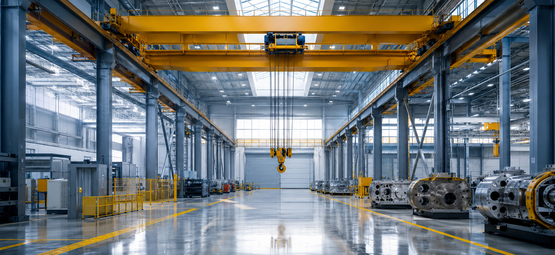
Rectangular Working Area Covering the Entire Bay |
|
Structural Load |
Lightweight and Space-Saving Frame |
Heavy Single or Double Girder Bridge Configurations |
|
Installation Cost |
Economical / Swift On-Site Assembly |
High Performance / Large Infrastructure Investment |
Correct Crane Selection and Safe Engineering Design
Before requesting a monorail crane price quotation for a plant, the engineering parameters of the project must be meticulously drafted. Selecting a system with inadequate tonnage ratings or improper speed controls accelerates structural fatigue. Focus closely on these technical criteria during your evaluation:
Track Geometry (Straight or Curved): If your production line includes turns or radius paths, articulating trolley models must be specified so that the hoist unit navigates curves smoothly without jamming.
Duty Cycle (FEM Class): Determine how many times the equipment will operate under full load daily. For high-intensity processing lines, high duty cycles (such as 2m or 3m classes) featuring robust motor thermal protection should be chosen.
Safety Equipment: Always ensure the integration of modern OHS-friendly components, such as electronic overload limiters, dual-speed lifting configurations, and reliable rope guides.
To examine our premium-engineered, heavy-duty lifting setups that increase manufacturing velocity while reducing your operational overheads, explore our specialized wire rope hoist products and discover our comprehensive industrial crane portfolio today.