Working in Narrow Warehouse Spaces: Solutions to Enhance Maneuverability
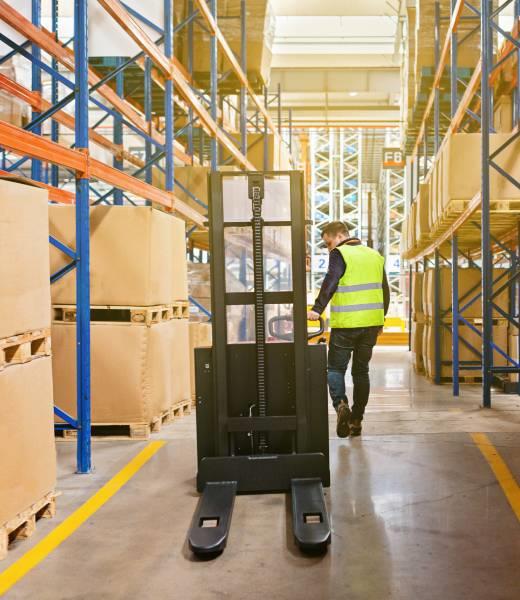
In modern logistics, the rising cost of industrial real estate is pushing businesses to store more products in narrower aisles. While narrowing aisles increases storage density, it introduces a significant operational challenge: limited maneuverability. In spaces where a standard industrial machine cannot turn or poses a risk while moving, workflow slows down, and the risk of accidents increases.
The key to maintaining efficiency in tight spaces is not forcing the space to fit the equipment, but choosing the right technology that adapts perfectly to the dynamics of narrow environments.
1. Turning Radius: Efficiency Measured in Millimeters
For an operator working in a narrow aisle, the most critical data point is the machine's turning radius. Compactly designed narrow-space equipment can maneuver at much tighter angles compared to standard machines.
-
Zero Tail Swing: Designs that eliminate the risk of the rear end hitting racks during turns significantly increase operational speed.
-
Short Chassis: A shorter overall machine length saves time not only within the aisle but also during transitions between aisles.
By utilizing these machines, you can minimize the distance between racks without compromising operational speed. For technical details on how to use your space more effectively, you can explore our guide on warehouse space-saving strategies with a stacker.
2. Operational Agility with Compact Machines
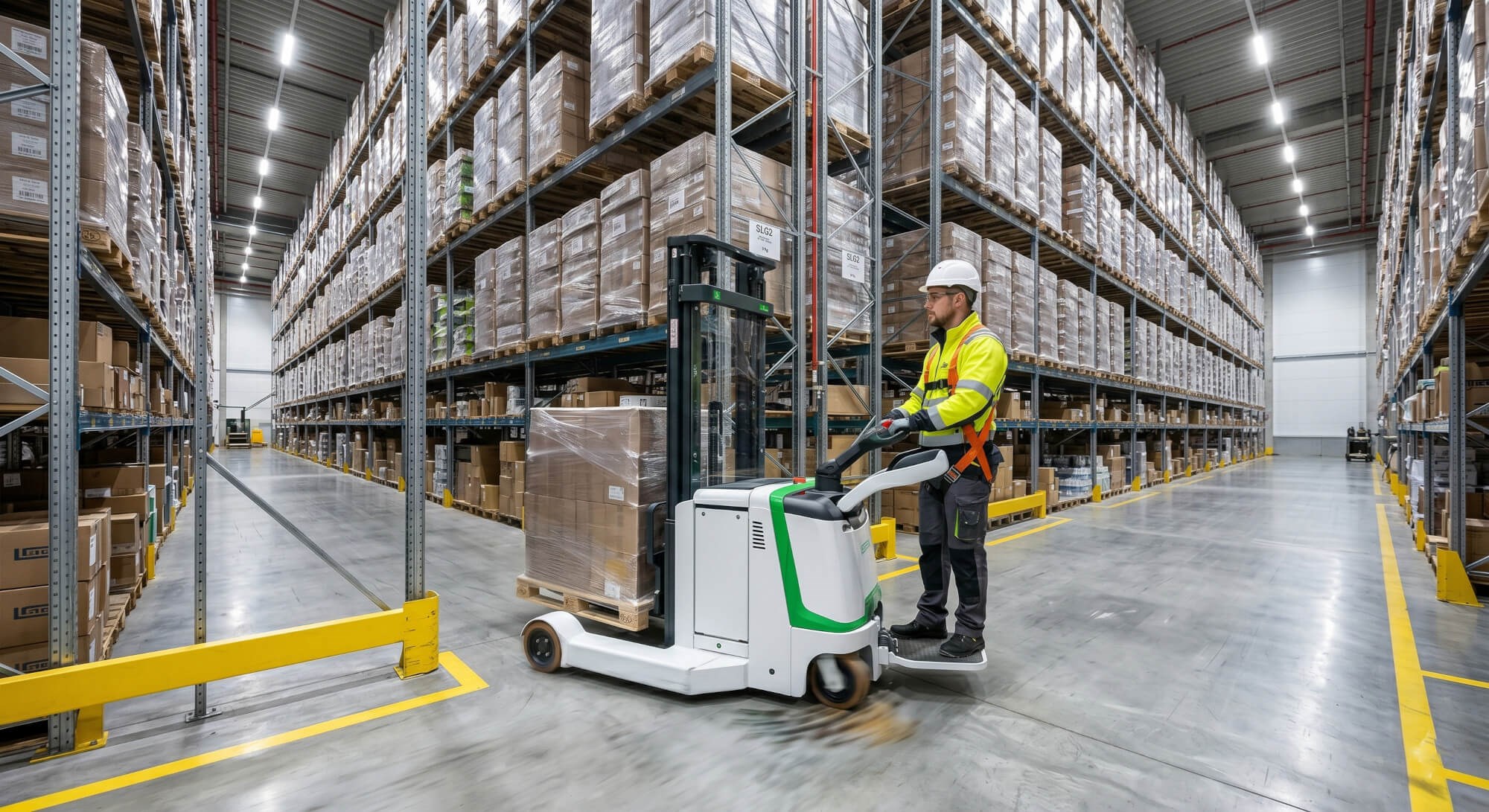
A compact forklift or a narrow-chassis stacker is valuable not just because it is small, but because its functionality is optimized for tight spaces.
-
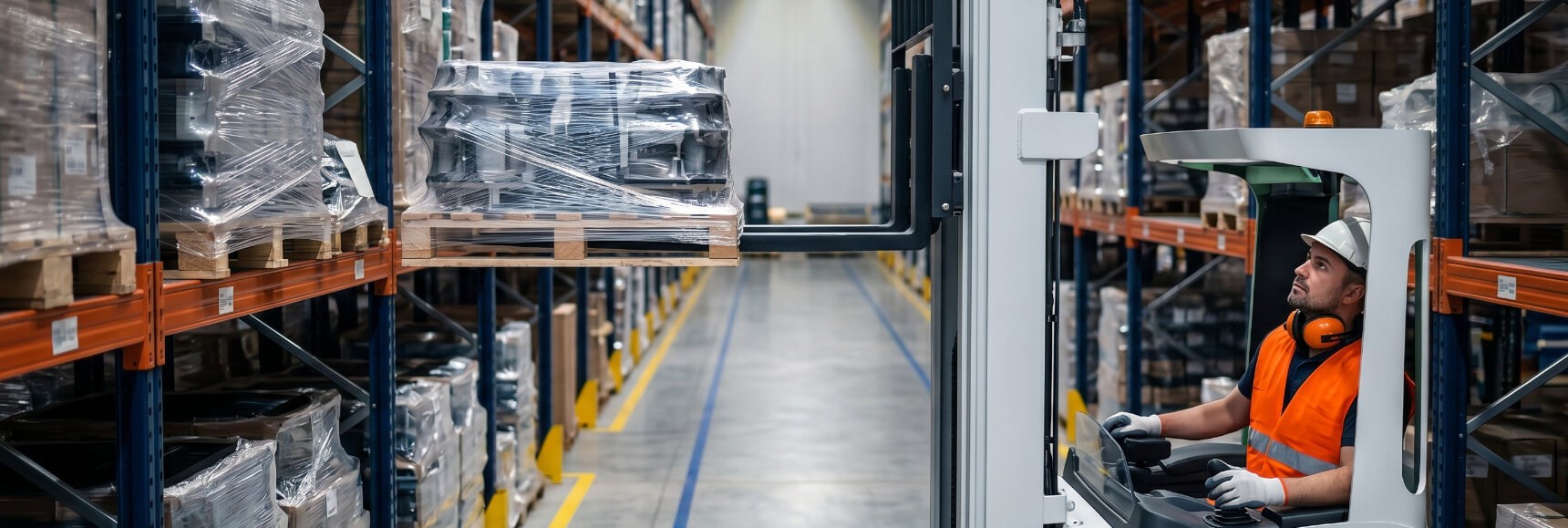
Vertical Efficiency: Narrow-space machines offer stability not only horizontally but also vertically. Ensuring the machine does not shake while placing a load at a high altitude in a narrow aisle is vital for both product safety and personnel health.
-
Agility: During transitions from loading docks to the inner warehouse, compact machines prevent traffic congestion, keeping the flow continuous.
3. Ergonomics: Operator Comfort in Tight Spaces
Working in narrow spaces is mentally and physically taxing for an operator. The constant fear of hitting racks and limited sightlines can lead to distractions.
-
Precision Control Systems: Joysticks and control levers that execute micro-movements with high precision increase the operator's confidence.
-
Visibility: In compact machines, the mast design is optimized to provide the operator with the best possible view of the load and the surroundings.
A machine with high maneuverability lightens the operator's physical load, minimizing errors caused by fatigue toward the end of a shift.
4. Narrow Space Equipment Selection Matrix
|
Need |
Critical Feature |
Recommended Solution |
|
High Storage Density |
Minimum Aisle Width (AST) |
Narrow-Chassis Stackers |
|
Fast Shipping |
High Maneuver Speed |
Electric Compact Solutions |
|
Aisle-to-Aisle Transition |
Short Turning Radius |
3-Wheel Compact Models |
In summary; success in a narrow-aisle warehouse comes from machines that account for every millimeter. Investing in the right equipment allows you to increase storage capacity while keeping your operational speed at its peak.