What Does Wrong Battery Selection Cost Businesses? The Forklift and Pallet Truck Example
In industrial facilities, logistics centers, and warehouses, the heart of the operation beats with electric material handling equipment. Forklifts and pallet trucks are the most dynamic components of this ecosystem. However, the power source driving these machines—the battery—is often viewed merely as a "consumable." In reality, a wrong battery selection can turn even the most advanced industrial machine into an inefficient, sluggish, and high-cost burden.
So, what exactly do faulty battery choices in forklifts and pallet trucks cost your business financially and operationally? How can you prevent these losses with the right strategy? Let’s examine the details.
1. The Invisible Time Thief: Frequent Charging Needs and Early Discharge
A forklift battery selected with the wrong capacity leads to energy depletion right in the middle of a shift. When a machine stops unexpectedly and has to be towed to the charging area, the entire warehouse traffic gets disrupted.
-
Manual and Heavy Processes: Especially in high-intensity operations, the long charging and cooling times of conventional lead-acid batteries necessitate complex spare battery replacement processes. The time lost during these changeovers directly drags down forklift efficiency rates.
-
Lack of Opportunity Charging: If a battery technology that is unsuited for rapid opportunity charging during short breaks is chosen, personnel are forced to halt operations entirely instead of just letting the machines rest.
2. Skyrocketing Maintenance Costs and Shortened Battery Life
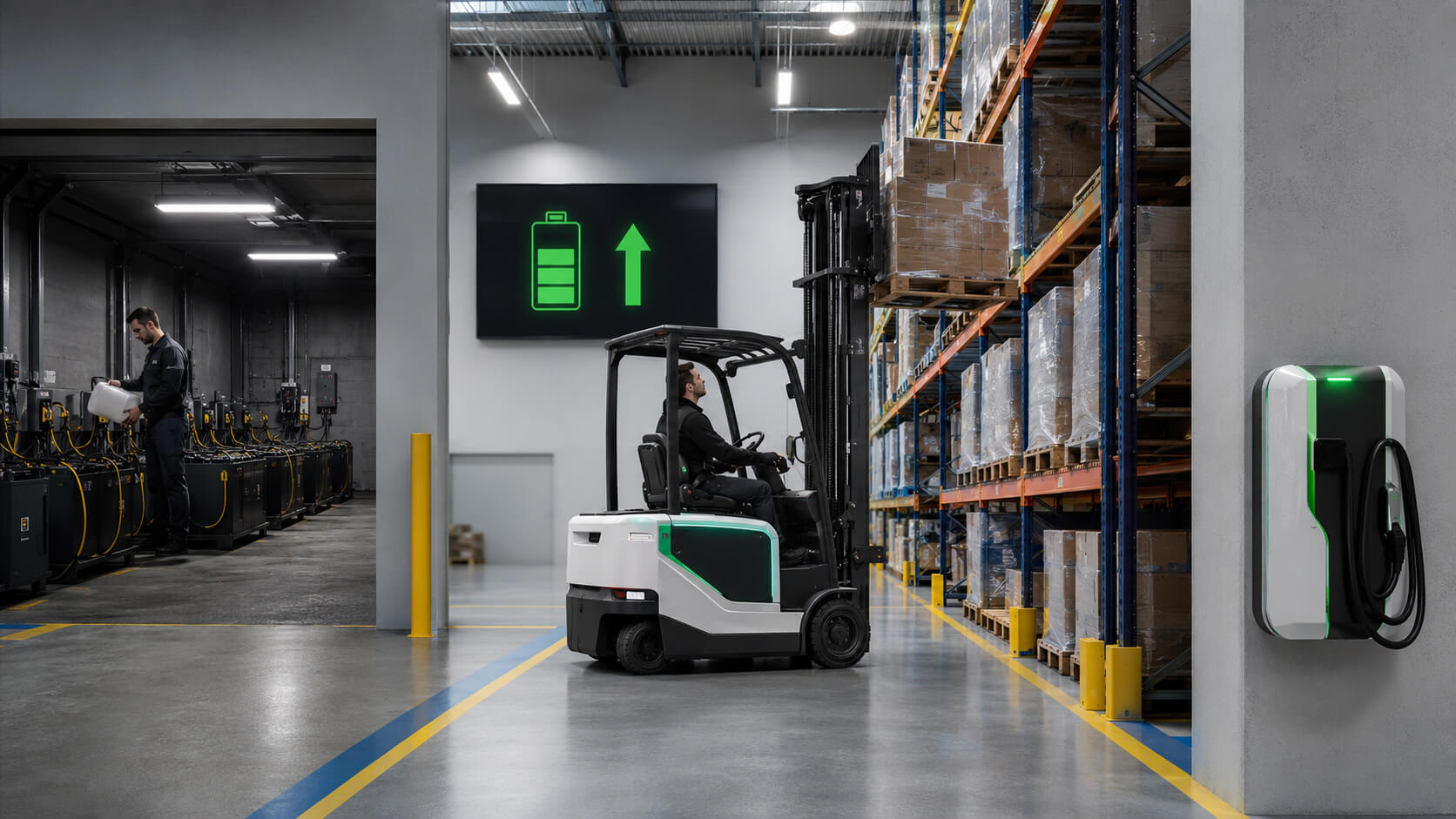
Every industrial battery technology comes with its own specific maintenance ritual. For instance, traditional lead-acid batteries require regular distilled water top-ups, specialized ventilation rooms, and strict voltage monitoring.
When battery types are selected that do not match the intensity of the operation or exceed the capacity of your maintenance staff, batteries rapidly undergo sulfation and cell loss. A pallet truck battery that is normally expected to last 5 years finishes its operational life cycle within 1 to 2 years due to incorrect usage and faulty technology matching, hitting the business with massive premature replacement costs.
3. Lead-Acid vs. Lithium-Ion: The Wrong Technology Match
In today's industrial landscape, battery costs are no longer measured solely by the initial purchase price. The differences between a lithium ion battery and a lead acid battery determine your profitability based on your style of operation.
-
Multi-Shift Operations: Sticking to traditional lead-acid batteries in a warehouse operating 2 or 3 shifts a day means investing in dedicated charging rooms, extra backup battery stocks, and crane replacement systems. This results in significant space and budget losses in your logistics layout.
-
Light and Short-Term Tasks: Conversely, making very high-budget lithium investments for a small pallet truck that only works 1–2 hours a day can unnecessarily extend the return on investment (ROI) period.
If you want to view technical data on how battery technologies and proper capacity pairings affect the overall output of your material handling equipment, you can review our guide on how battery selection affects machine performance.
Comparison Table: Choosing Your Battery Based on Operation Type
|
Operation Type |
Lead-Acid Battery |
Lithium-Ion Battery |
|
Number of Shifts |
Best for Single Shift |
Ideal for Multi-Shift (2-3) |
|
Maintenance Need |
High (Distilled water, cleaning) |
Zero Maintenance |
|
Charging Behavior |
Full discharge/charge required |
Perfect for opportunity charging (Breaks) |
|
Initial Investment |
Lower |
Higher |
|
Total Service Life |
Short-Medium |
Long (3-4 times more cycles) |
4. Forklift Performance and Voltage Drops
An incorrect battery selection wears out not only the battery itself but also the motor and hydraulic systems of the machine. A low-quality or incorrectly rated industrial battery experiences sudden voltage drops under heavy load. This reduces the forklift’s lifting speed, causes it to struggle on ramps, and increases the risk of electronic components overheating and failing.
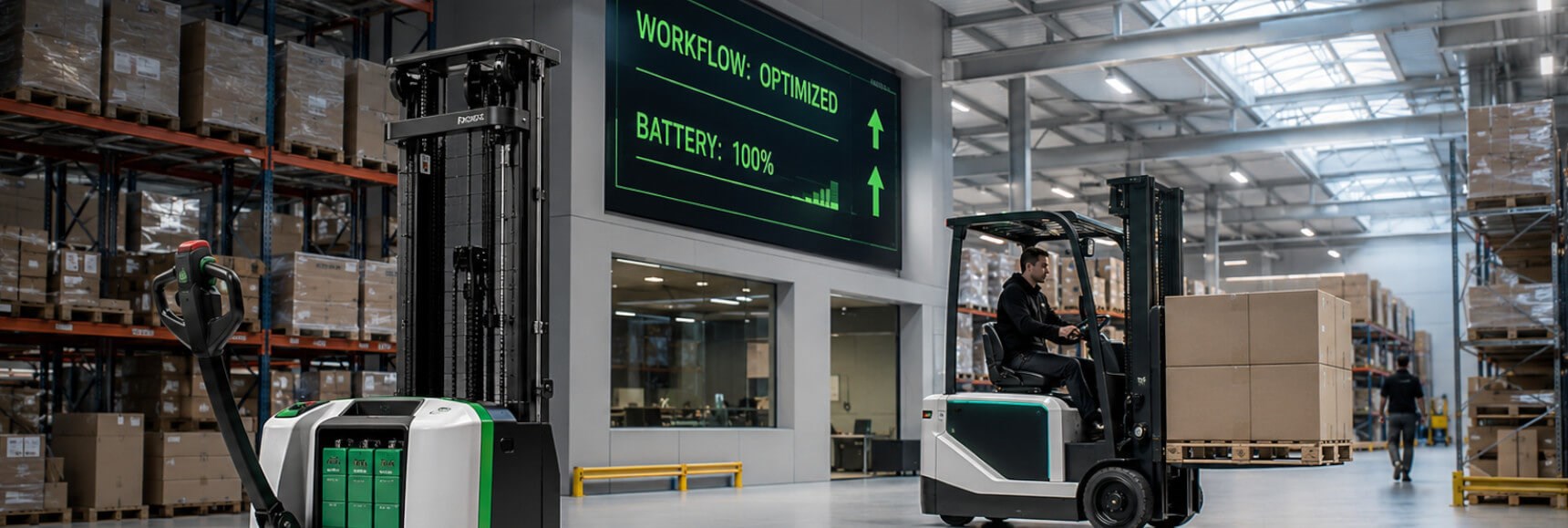
Optimize Your Workflows with the Right Battery Strategy
To eliminate losses in your facility and permanently lower operational costs, you should follow these three steps:
-
Conduct a Power Audit: Clarify exactly how many hours your machines run actively each day and how much weight they lift.
-
Evaluate the Infrastructure: If you do not have the space to establish a ventilated charging room in your warehouse, pivot directly toward plug-and-play lithium technologies.
-
Plan for Total Cost of Ownership (TCO): Focus on the long-term operational expenses and battery life cycle rather than just the initial upfront sticker price.
To explore our high-performance energy solutions that minimize downtime, along with compatible material handling equipment and fast access to original components, visit our Paftar Spare Parts page.