Manual vs. Scale: Choosing the Right Pallet Truck for Your Business
Explore key differences between manual and scale pallet trucks. Compare load capacities, weighing precision, and operational efficiency for your warehouse.
Ensuring swift and secure ground-level material transfer across warehouses, logistics hubs, and manufacturing plants is a cornerstone of operational continuity. When selecting the most reliable material handling equipment, pallet trucks remain the primary choice. However, during procurement, deciding between a traditional manual model and a unit equipped with integrated weighing technology becomes a vital capital decision.
A common question in the industry centers on whether standard transfer solutions or models with built-in weighing systems offer the best ROI. To build the most effective pallet truck selection strategy for your business, let us examine both mechanisms' technical specifications, application areas, and operational benefits.
Core Differences Between Manual and Scale Pallet Trucks
To streamline your decision-making process, the difference between manual and scale pallet truck setups should be evaluated across three key dimensions:
1. Weighing and Measuring Capabilities
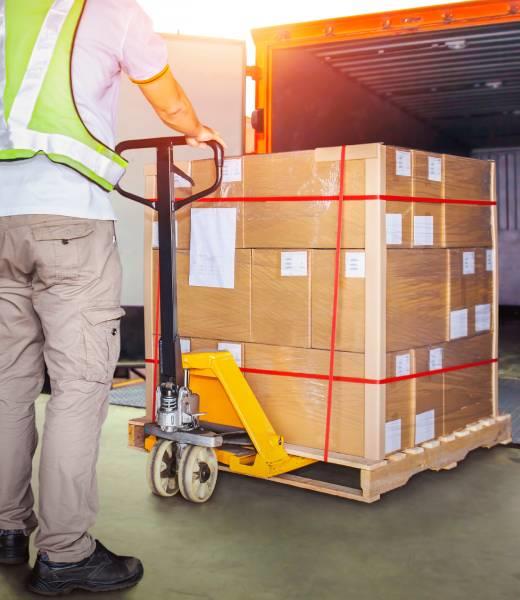
Manual Pallet Truck: Designed exclusively to transfer palletized loads physically from Point A to Point B. It possesses no built-in mechanism to measure load weight.
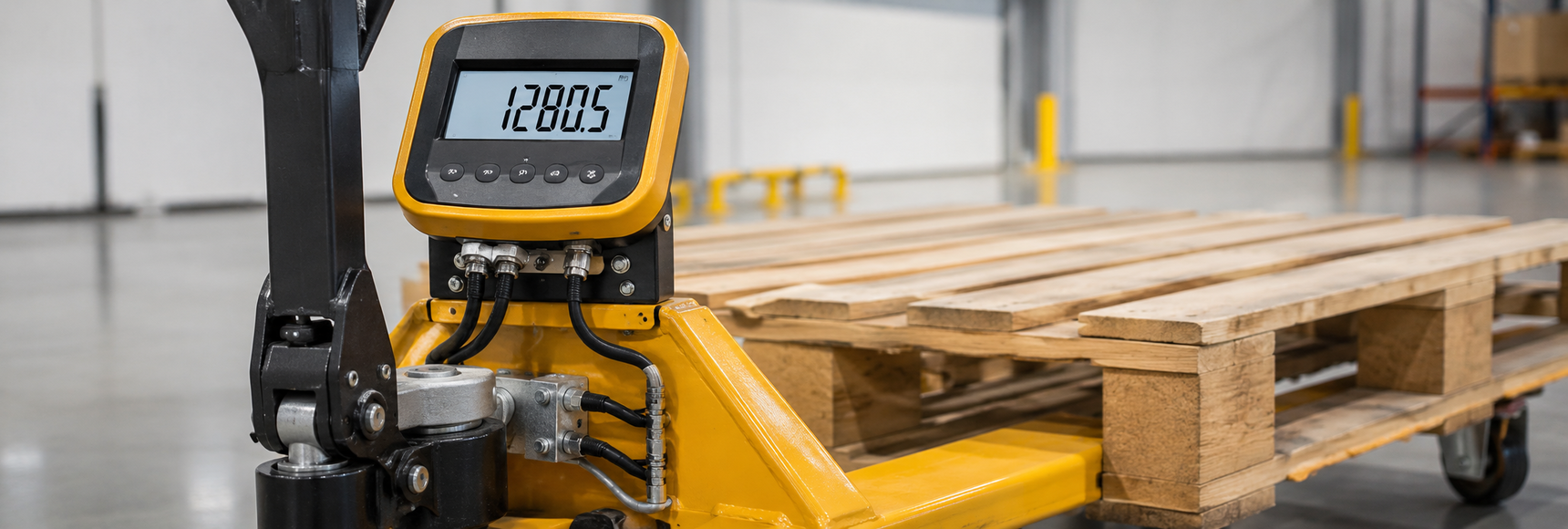
Scale Pallet Truck: Equipped with heavy-duty load cells integrated directly into the chassis and a digital display screen, it measures the exact weight of a lifted pallet with high precision on the spot.
2. Process Efficiency and Time Savings
When utilizing a standard manual pallet truck, operators must transport pallets to a stationary floor scale, unload or weigh them, and then haul them back to the dispatch bay to log weight metrics. The true value of what a scale pallet truck offers lies right here: it combines material handling and weight verification into a single step, eliminating extra trips to static scales and preventing costly delays.
3. Application Scenarios
While standard models excel in small distribution centers focused solely on horizontal transport, scale pallet trucks offer an unmatched advantage in high-volume logistics lines involving freight billing, raw material acceptance, batch dosing, and outbound shipping checks.
Operational Needs Assessment
To make the right choice for your facility, evaluate how each equipment type enhances daily workflows. For routine horizontal transport, manual pallet truck solutions provide robust chassis designs and cost-effective performance for moving high-tonnage goods. To discover how domestic manufacturing standards and swift spare parts availability impact long-term equipment durability, read our guide on the advantages of locally produced pallet trucks the paftar difference.
Conversely, if your priority is instantly verifying incoming goods against delivery notes, preventing highway overload penalties, or streamlining outbound freight logs directly from the shop floor, investing in integrated scale technology across our pallet truck portfolio will deliver superior ROI.
Select the Ideal Model for Your Operational Volume
When investing in pallet trucks, look beyond the initial purchase price and focus on the overall time and labor savings the equipment delivers daily. For facilities with lower throughput focused strictly on floor-level transport, standard manual pallet trucks offer the most economical path. For operations demanding real-time weight tracking, rapid receiving, and dispatch accuracy, scale pallet trucks represent a high-value investment that pays for itself quickly.
To explore certified, long-lasting material handling equipment tailored to your tonnage and weighing requirements, browse Paftar's product catalog or contact our technical sales team for customized quotations.