Machinery Skate Types and Selecting the Right Model
Explore the differences between fixed, steerable, and platform machinery skates for heavy load handling. Choose the right capacity model for your facility.
Moving multi-ton machinery, steel crates, or massive transformers across industrial plants, logistics facilities, and construction sites poses a significant engineering challenge, particularly in tight, low-clearance, or restricted areas where conventional forklifts or overhead cranes cannot operate. The most traditional and effective way to slide ultra-high tonnage loads at ground level with millimeter precision and minimal friction is to deploy heavy-duty machinery skates.
Also referred to as load-moving skates or transport rollers, these tools multiply manual effort or light towing power while delivering exceptional weight capacities. However, to ensure a highly ergonomic, damage-free operation that aligns perfectly with modern occupational health and safety regulations, selecting the correct configuration among various machinery skate types is paramount.
Machinery Skate Configurations and Core Differences
Depending on the geometry and center of gravity of the load you intend to transfer, you can choose from these core equipment designs:
Fixed / Straight-Line Machinery Skates: These chassis feature rigid wheel alignments designed to move exclusively along a linear (straight) path. Lacking steering mechanisms, they are typically used in pairs or sets to support the rear sections of a load and maintain tracking stability.
Steerable / Turntable Models: Engineered for complex maneuvering, these heavy load machinery skate models feature a 360-degree rotating bearing turntable on top and a dedicated towing/steering handle (drawbar) at the front. They serve as the lead equipment whenever a load needs to navigate sharp corners or structural shifts.
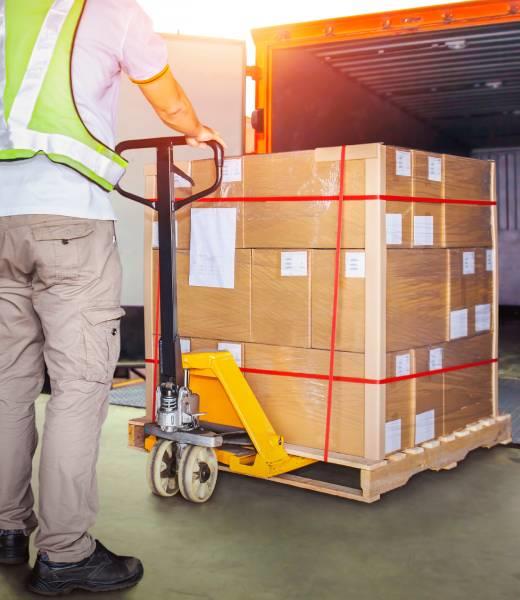
Platform Skates / Parcel Trolleys: Unlike high-tonnage industrial skates, these are wide-decked transport mechanisms engineered for manual, low-tonnage transfer of loose items such as parcels, packaged goods, and light material bins.
Equipment Matching by Workspace and Load Profile
The type of transport skate selected must be directly dictated by the structural layout of your workspace and the total tonnage of the load. For ultra-heavy industrial staging, plant commissionings, or transformer positioning ranging from 3 tons to well over 50 tons, steerable machinery skates with 360-degree turntables deliver the necessary tracking adaptability to maneuver heavy assets safely around tight corners.
Conversely, for long, straight corridor transfers where steering adjustments are unnecessary, fixed machinery skates offering capacities between 3 tons and 30 tons provide sufficient stability on their own. For rapid, everyday material handling inside distribution centers, mailrooms, or office environments, heavy industrial skates should be bypassed in favor of ergonomic parcel trolleys. These units handle capacities from 150 kg to 500 kg and utilize high-mobility swivel casters to maximize operator ergonomics during light logistics runs.
Key Technical Parameters for Choosing Your Model
To safeguard employee ergonomics and accelerate load transfers across your factory or warehouse, always analyze these critical variables:
1. Load Capacity and Distribution
The gross weight of the machine or frame must be divided across the total number of skates used. To prevent the load from concentrating on a single point and risking failure, industrial teams typically implement 3-point or 4-point configuration sets. For example, placing one steerable skate at the front and two fixed skates at the rear forms a highly stable tripod base that keeps the load perfectly balanced.
2. Roller Material and Floor Composition
Polyurethane (PU) Rollers: Excellent for epoxy-coated, smooth factory floors. They operate quietly, prevent floor scarring, and eliminate the risk of cracking delicate surface coatings.
Steel / Cast Iron Rollers: Ideal for ultra-high tonnage loads where synthetic wheels might deform. Because steel rollers exert high contact pressure and can wear down concrete, they are restricted to heavy industrial foundries and specialized casting floors.
3. Integration with Auxiliary Lifting Equipment
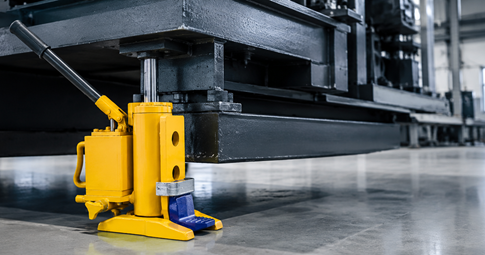
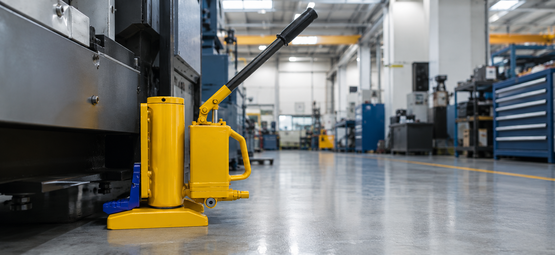
Before sliding machinery skates beneath a load, the structure must first be raised a few centimeters off the ground. Standard hydraulic bottles often fail here because their high closed height cannot fit under low-clearance machine frames. To solve this, operators must utilize a professional, low-profile jack (such as a hydraulic toe jack) to safely elevate the asset from its base before positioning the rollers underneath.
Investment Factors and Industrial Procurement
When evaluating machinery skate prices across the industrial market, look past the initial capital expense and examine chassis steel wall thicknesses, roller bearing certifications, and the friction coefficients of the rotating turntables. Opting for low-grade components risks roller seizures under full load, which can trigger severe workplace accidents, structural shifts, or catastrophic floor failures.
To execute heavy machine installations and industrial material transfers under the highest safety benchmarks, explore our premium machinery skate selections. For high-volume, lightweight daily logistics and sorting workflows, discover our highly agile and ergonomic parcel trolley product lines today.