How Does Equipment Use Affect Efficiency in Operational Processes?
In the industrial world, efficiency is generally defined as "obtaining more output with fewer resources." In a warehouse or factory environment, the two largest components of these resources are human power and time. Every piece of equipment used in operational processes is the primary lever that determines how effectively these two resources are spent.
Many businesses attempt to overcome operational bottlenecks by increasing headcount; however, without a proper equipment strategy, this often only increases chaos. The real solution lies in viewing equipment use not as a cost item, but as an "efficiency engine" that determines operational speed.
1. Multiplying Staff Potential with Technology
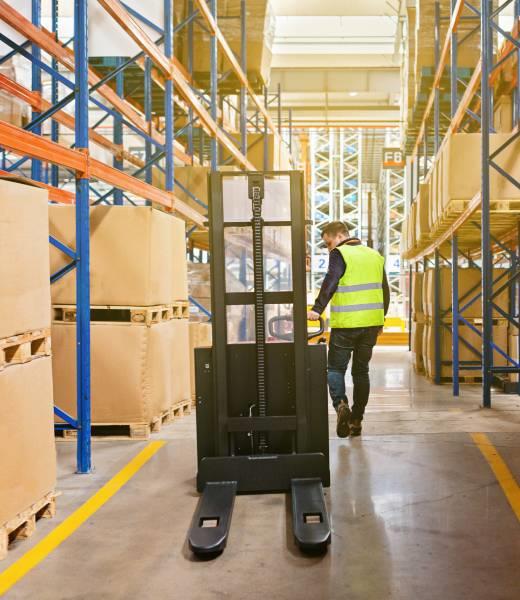
The most direct effect of equipment use on efficiency is enabling personnel to exceed their physical limits. A loading process that takes hours and requires high physical effort using manual methods can be reduced to minutes with the right machine.
Equipment does more than just speed up the work; it allows staff to save their energy for more strategic tasks like inventory counting, quality control, and organization. This prevents the decline in human energy toward the end of a shift from slowing down operation speeds. To understand how to structure this cycle, you can examine the strategic steps in our guide on equipment optimization for staff productivity.
2. Uninterrupted Flow: The Role of Failure and Maintenance
Efficiency is measured not only by the speed of the machine but also by its "uptime." When equipment fails and remains out of service while waiting for spare parts, it causes the entire operational chain to break.
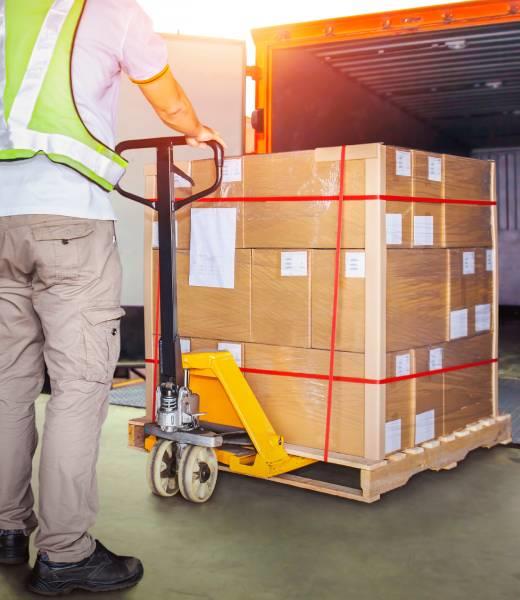
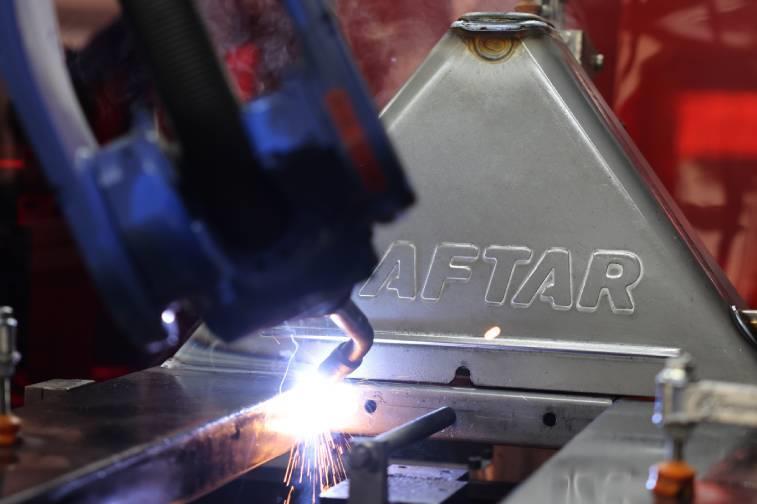
This is where a strategic choice comes into play: Supply chain speed. The speed at which you can access technical support and spare parts in case of a breakdown determines operational downtime. At this point, choosing a locally manufactured solution eliminates the weeks of waiting for imports, thereby maintaining productivity. You can learn in detail why this path is more profitable from our content on locally made pallet trucks: why they’re the smarter pick.
3. Eliminating Bottlenecks and Smart Warehouse Management
Efficiency in operational processes is like a river's flow. If your stacking speed is high but your transport speed is low, a "bottleneck" occurs at the warehouse entrance.
A correct equipment hierarchy ensures:
-
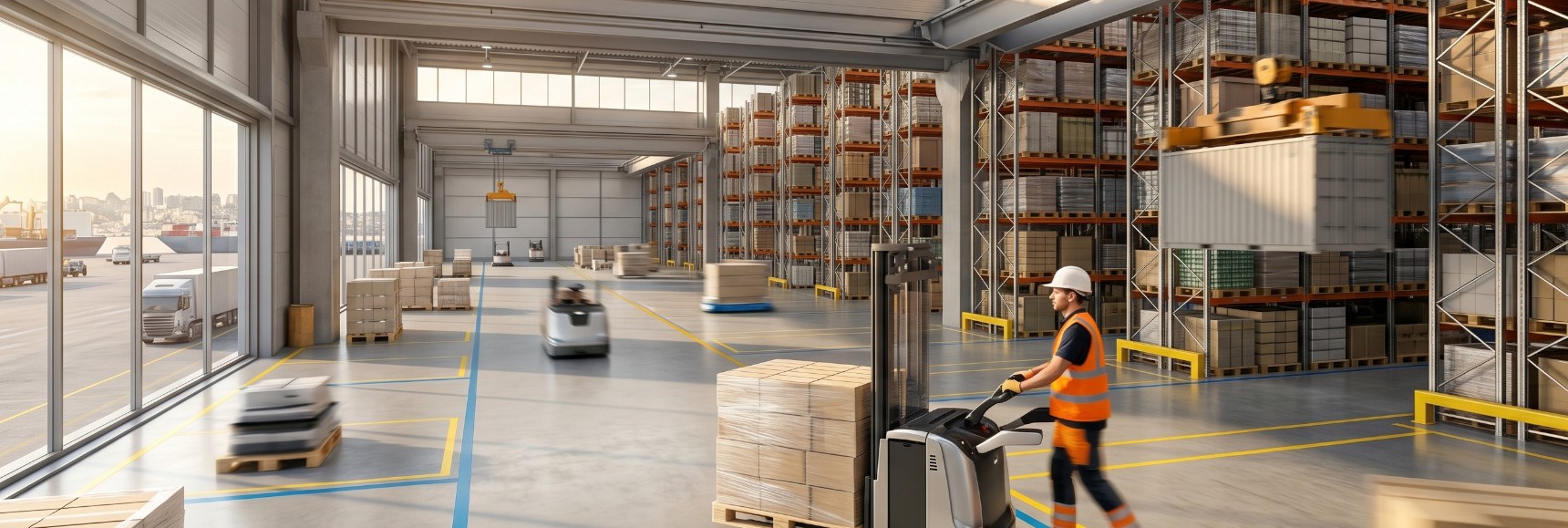
Speed Balance: Lifting and transport vehicles operating at compatible capacities.
-
Space Optimization: Maximizing warehouse volume thanks to equipment suitable for narrow aisles or high racks.
-
Error Reduction: Minimizing product damage through battery-powered machines with precision control systems.
4. Safety: The Invisible Foundation of Efficiency
Many businesses view safety as an "obstacle" or "slower" to efficiency. In fact, the opposite is true. A single workplace accident not only threatens human health but also causes the entire operation to stop, leads to legal processes, and results in serious prestige loss.
An equipment fleet that operates safely and stably ensures that personnel work with confidence and at a more fluid pace, keeping productivity steady in the long run.
5. Strategic Equipment Investment
Equipment use in operational processes is much more than simple tool usage. A correctly selected and optimized machine fleet multiplies your personnel's productivity while driving down operational costs. When building the future of your business, you should position your machines not just as fixed assets, but as the most valuable members of your operation.