Factors Affecting Pallet Truck Performance in Daily Operations
Pallet trucks are the "unsung heroes" of the logistics and warehousing world, serving as the primary pulse of a facility's workflow. However, not every piece of equipment performs the same on every floor or under every load. While many businesses focus solely on lifting capacity, the elements that determine daily efficiency are far more technical.
To achieve maximum speed in your operational processes and extend the life of your equipment, we are putting the critical variables that directly affect pallet truck performance under the microscope.
1. Wheel Selection: The Secret Key to Performance
The only point of contact between a pallet truck and the ground is its wheels. Choosing the wrong wheel type can lead to increased operator effort, damaged floors, or excessive noise pollution. To optimize performance, you must select the wheel material based on the working environment:
-
Polyurethane: Provides silent operation and protects sensitive floors.
-
Nylon (Polyamide): Minimizes friction under heavy loads and is resistant to corrosion.
-
Rubber: Offers high grip on wet or slippery surfaces.
Determining which material is right for your warehouse directly impacts operational speed. For a detailed comparison, check out our guide on pallet truck wheel selection: polyurethane, nylon, rubber.
2. Floor Conditions and Maneuverability
Pallet truck performance is directly proportional to the smoothness of the floor it operates on. Cracked concrete, ramp transitions, or debris like dust and stretch film scraps increase wheel resistance, straining both the motor (in electric models) and the operator (in manual models). A clean and leveled floor can increase equipment performance by up to 20%.
3. Load Balance and Capacity Management
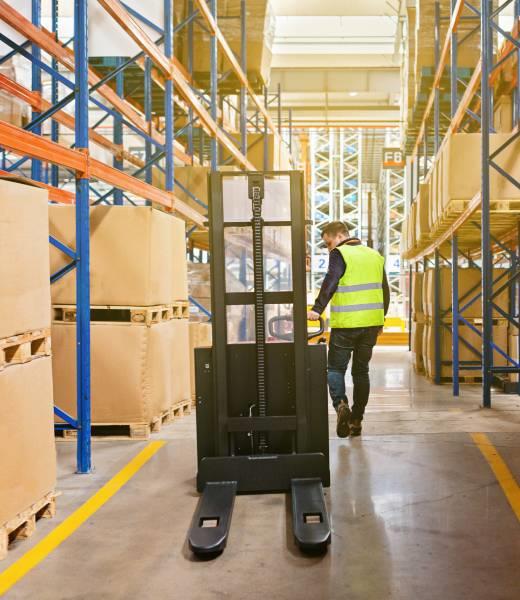
Every pallet truck model has a limit. However, performance isn't just about "being able to carry" a load; it’s about how steadily and controllably you can transport it. Failing to center the load on the forks puts uneven pressure on the hydraulic system and restricts maneuverability, significantly extending operation times.
4. Manual to Electric: Distance and Time
As transport distances increase, the performance of manual pallet trucks drops due to human fatigue. For transfers exceeding 50 meters, switching to electric models can increase operational speed by up to 150%. To understand how equipment technology directly shortens workflows, see our article on how the right pallet truck reduces operation times.
5. Avoiding Common User Errors
Even the most advanced machine loses performance under incorrect usage. Straining the hydraulic system, exceeding capacity, or neglecting periodic maintenance are "invisible time thieves." To maintain performance and minimize productivity losses, consider our list of the top 12 most common mistakes in pallet truck usage as a proactive measure.
6. The Right Combination for Maximum Efficiency
Pallet truck performance in daily operations reaches its peak through the combination of the right wheels, proper load balance, and trained operators. The more efficiently your equipment works, the smoother your logistics processes will run.