Warehouse Racking Safety: 7 Critical Rules Every Facility Must Follow
Master warehouse rack safety. Learn 7 critical rules covering pallet placement, beam capacity limits, column protectors, and structural rack inspections.
In modern logistics hubs, distribution centers, and manufacturing plants, high-density industrial pallet racking systems form the structural backbone of high-volume storage. However, when steel frameworks support dozens of tons of palletized cargo towering meters above active work corridors, racking transforms into one of the facility’s highest-risk structural zones. Minor forklift collisions, overloaded beams, and improperly seated pallets can trigger catastrophic rack collapses, resulting in severe worker injuries, total inventory loss, and prolonged facility shutdowns.
Achieving a zero-incident operation requires rigid compliance with industrial warehouse racking safety standards. Below are the 7 essential safety rules required to protect facility personnel, maintain structural rack integrity, and safeguard warehouse inventory.
7 Critical Rules for Industrial Pallet Racking Safety
To prevent structural deflections, falling objects, and catastrophic collapses, facilities must implement these seven core safety principles:
1. Strictly Adhere to Safe Working Load (SWL) Plaque Limits
Every racking bay is engineered with specific capacity limits per beam level and upright frame. High-visibility load notice plaques approved by the rack manufacturer must be installed prominently at the end of each aisle. Never assume a beam can support "just one more pallet." Overloading structural horizontal crossbeams creates irreversible deflection (sagging) and accelerated metal fatigue.
2. Always Store the Heaviest Payloads on the Lower Tiers
Static stability requires keeping the center of gravity as close to the ground floor as possible. In accordance with pallet rack safety standards, place high-tonnage crates and dense goods on the base floor or the lowest beam elevation. As storage heights increase, reduce pallet weights progressively. This vertical hierarchy prevents top-heavy lateral sway during seismic tremors or equipment impacts.
3. Never Elevate Broken, Cracked, or Compromised Pallets
Structural racking safety depends heavily on the integrity of the pallet itself. Pallets with fractured bottom deckboards, missing blocks, protruding nails, or moisture rot can suddenly snap under heavy loads once seated on open rack beams. Inspect every pallet prior to elevation, and immediately restock broken units onto certified, undamaged wooden or plastic skids.
4. Center Pallets Symmetrically Across Load Beams
In safe pallet stacking, loads must sit evenly across both the front and rear horizontal beams. Placing a pallet off-center or askew concentrates point-load stress onto a single member, increasing structural deflection. Ensure consistent pallet overhang (typically 50 mm beyond the front and rear beam edges) to achieve optimal seated balance.
5. Install Heavy-Duty Upright Column Protectors
Nearly 90% of warehouse rack structural failures stem from handling machinery striking corner uprights during aisle entry and turn maneuvers. Equip all aisle-end frames and heavy-traffic columns with floor-anchored steel or energy-absorbing polymer upright protectors. These barriers absorb dynamic collision energy, shielding primary load-bearing vertical uprights from structural buckling.
6. Match Handling Machinery to Racking Dimensions and Aisle Widths
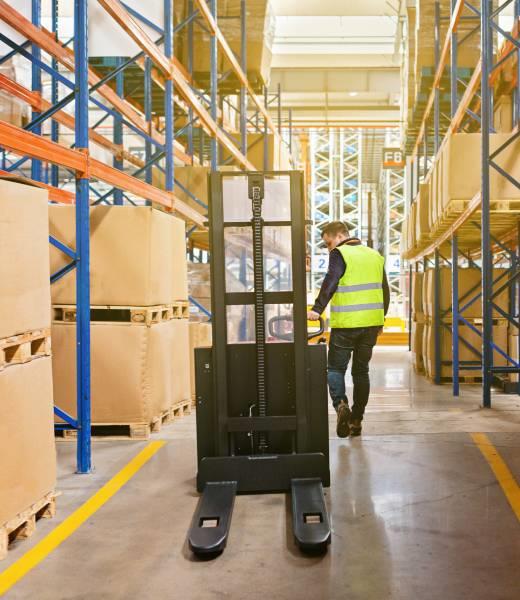
Navigating oversized counterbalance forklifts through narrow aisles or forcing underpowered machines to reach top-tier racks creates severe collision risks. Ensure your equipment's residual capacity matches the maximum beam elevation. To determine the right equipment profile for your facility's vertical layout, review our technical guide on stacker selection based on warehouse rack height battery and electric guide.
7. Enforce Daily Visual Inspections and Annual Structural Audits
Rack maintenance is an active, ongoing operational cycle:
- Routine Shift Checks: Operators must report twisted uprights, missing safety locking pins, and beam gouges to floor supervisors immediately upon discovery.
- Annual Technical Audits (EN 15635 Standards): Conduct accredited structural inspections at least once a year. Systematically categorize rack damage into green, amber, and red risk thresholds, offloading and repairing red-risk bays immediately.
Missing Beam Safety Locking Pins: A Preventable Hazard
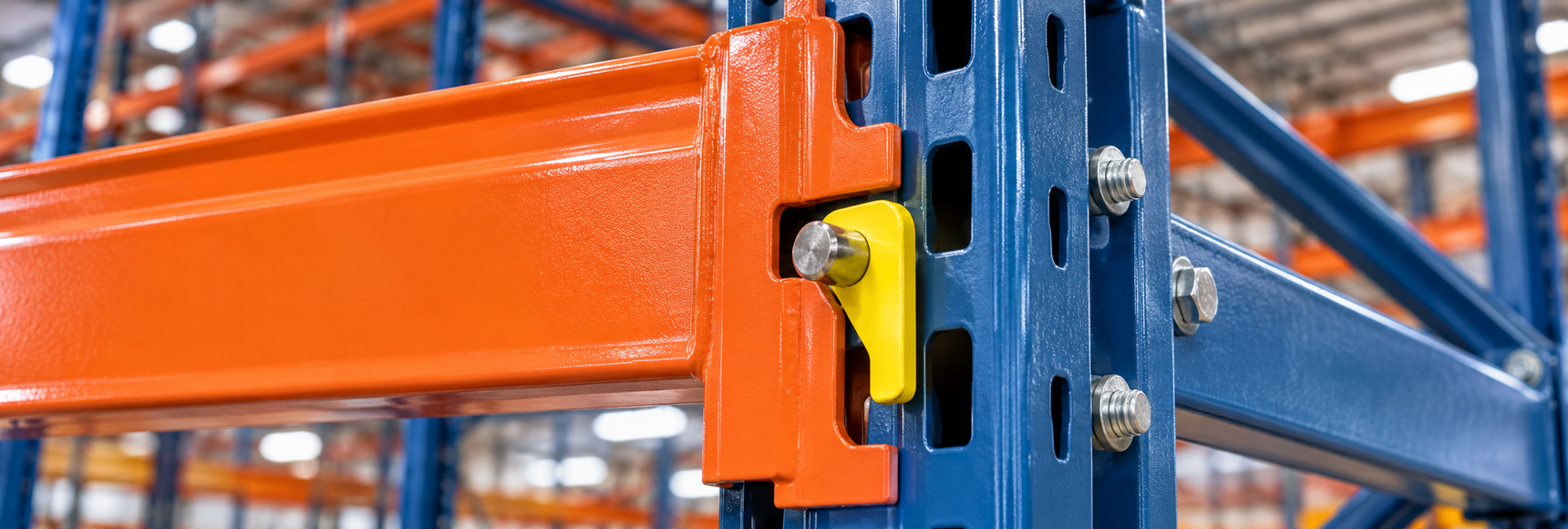
Traverse beams connect to vertical upright slots using directional locking teardrop clips. If an operator accidentally catches a beam from below while elevating a pallet, the beam can dislodge unless secured by a mechanical safety locking pin. A single missing or sheared safety pin can cause an entire beam level to collapse, triggering a progressive domino failure throughout the bay. Inspect and verify safety pins across all beam connections regularly.
Engineering Safe Storage Yields Operational Uptime
High-throughput warehouse operations cannot compromise on structural storage safety. By combining balanced weight distribution, impact-resistant corner guarding, certified equipment matching, and diligent structural audits, facilities can completely eliminate structural hazards and protect workforce safety.
To equip your high-bay racking corridors with narrow-chassis, stable-mast electric stackers and handling equipment engineered for precision pallet placement, explore Paftar’s comprehensive material handling lineup or connect with our engineering team for expert technical support.