Pallet Truck Dimensions: How to Choose the Right Fork Length
Complete guide to standard, short, and long fork pallet truck dimensions. Choose the right fork length based on pallet size, aisle width, and load profile.
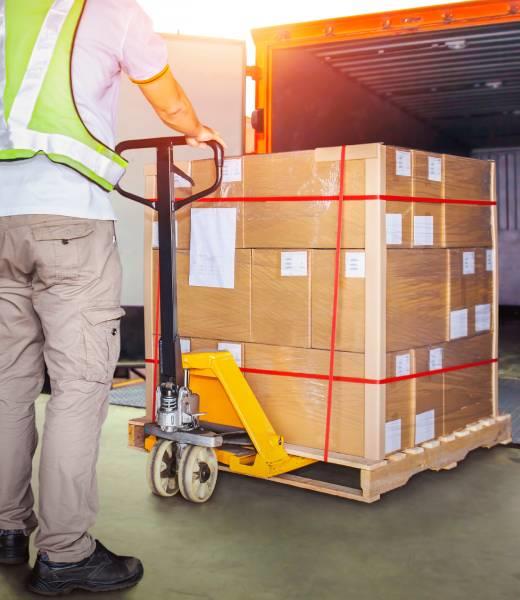
Pallet trucks serve as the core workhorse of horizontal material handling across distribution centers, manufacturing workshops, and logistics terminals. However, when purchasing a new unit or replacing fleet assets, decision-makers frequently focus solely on load capacity (tonnage) while overlooking critical chassis dimensions. In real-world operations, fork length and chassis dimensions represent the primary variables determining handling speed, aisle maneuverability, and workplace safety.
Selecting pallet truck dimensions incompatible with your pallet standards or aisle widths leads to fractured pallet boards, jammed turns in tight corners, and severe tip-over risks caused by off-center loading. To build an optimal strategy for choosing a pallet truck by pallet size, let us examine the operational use cases of standard, short, and long fork models.
Pallet Truck Categories by Fork Length and Key Applications
The diversity of industrial pallets combined with plant architectural constraints demands specialized pallet truck fork length options:
1. Standard Fork Pallet Trucks (1150 mm)
This configuration represents the benchmark across global logistics and European supply chains. The 1150 mm fork length is precision-engineered to handle standard 800x1200 mm Euro pallets (EPAL) from either the short or long side without structural overhang. It is the ideal baseline choice for distribution warehouses with standard aisle clearances.
2. Short Fork Pallet Trucks (800 mm)
Engineered specifically for confined spaces and high-density environments where turning radius is severely restricted. Deploying a short pallet truck delivers major maneuverability advantages in tight scenarios such as:
Navigating inside straight-truck cargo beds, delivery vans, and semi-trailers during freight staging
Elevator-assisted freight handling and retail backroom stock replenishment
Handling half-pallets (600x800 mm), display pallets, and compact metal storage wire bins
3. Long Fork Pallet Trucks (1500 mm – 1950 mm)
Engineered for specialized manufacturing lines, bulky goods, and high-throughput distribution corridors, long pallet truck configurations are built to carry oversized loads or multiple pallets simultaneously:
1500 mm Forks: Provide an ultra-stable base for non-standard industrial crates, machinery frames, and large 1000x1200 mm or 1200x1200 mm industrial skids.
1800 mm – 1950 mm Forks: Capable of picking up two standard Euro pallets back-to-back in a single trip, cutting transit times in half across expansive logistics hubs.
Technical Criteria for Selecting Fork Length
To accurately match your pallet truck fork dimensions to operational workflows, analyze these 3 critical parameters:
Pallet Type and Load Center Alignment
The bottom board profile of your pallets (open vs. perimeter-base skids) and the entry direction dictate required fork reach. Forks that extend too far past the pallet can impale adjacent inventory behind the target stack, while forks that are too short fail to support the load center, leading to forward tipping when braking.
Operating Aisle Width and Turning Radius (Ast)
As fork length increases, the equipment's turning radius expands proportionally. In narrow-aisle racking layouts, turning a long-fork unit becomes physically impossible. If your aisle width falls below 2 meters or operations rely on freight elevators, 800 mm models eliminate handling gridlocks.
Overall Fork Width (550 mm vs. 685 mm)
In addition to length, external fork width is vital. The European standard spacing is 540–550 mm across the forks, optimized for Euro pallets. For wider American-style GMA pallets (1000x1200 mm) or heavy machinery skids, a 685 mm broad-stance fork chassis prevents lateral sway. For more practical fleet evaluation strategies, explore our guide on choosing a pallet truck 7 tips to lighten the transport load.
Tailoring Dimensions to Your Facility for Peak Efficiency
Selecting the proper fork configuration is a vital decision that safeguards cargo integrity and maximizes cycle speed. While 1150 mm models remain the primary choice for standard Euro pallet flows, deploying 800 mm compact forks resolves truck-bed staging bottlenecks, and 1500–1950 mm extended forks maximize volume throughput for oversized cargo and dual-pallet runs.
From agile 800 mm short-chassis variants to heavy-duty 1950 mm extended-fork models, explore our complete industrial handling lineup on the pallet truck product page, or contact Paftar’s engineering specialists to find the ideal dimensions for your facility.