Choose the Right Drum Stacker for Industrial Handling
Master safe drum handling in chemical, food, and manufacturing plants. Learn how to select drum stackers by clamp mechanics, tilt options, and lift heights.
Across chemical processing, petrochemical refining, food manufacturing, lubricants, and coatings industries, liquid raw materials and finished products are predominantly stored and transported in standard 200–220 liter (55-gallon) steel or plastic drums. When filled with dense liquids or semi-solid resins, these containers easily exceed 250 to 350 kilograms. Their cylindrical geometry, coupled with the dynamic sloshing of internal liquids, makes moving them with conventional flat-fork pallet trucks or counterbalance forklifts exceptionally hazardous.
Improper handling methods such as dragging barrels across floors, wedging them precariously across standard pallet forks, or suspending them from makeshift overhead hooks frequently trigger dropped containers, toxic leaks, chemical burns, and severe workplace injuries. Establishing a zero-incident workflow requires certified, purpose-built drum handling equipment engineered to lift, clamp, and manipulate cylindrical loads safely.
4 Essential Selection Criteria for an Industrial Drum Stacker
To optimize the vertical and horizontal handling of cylindrical payloads across processing lines, evaluate these key technical specifications:
1. Drum Construction and Clamping Mechanism
Industrial facilities handle tight-head steel drums, open-top plastic barrels, and fiberboard cylinders. Your drum lifting attachment or dedicated stacker must integrate compatible gripping fixtures—such as parrot-beak rim clamps or ratcheting perimeter saddle hoops that lock firmly around the container's top chime or cylindrical body without slipping or crushing thin drum walls.
2. Tilting and Dispensing Capabilities
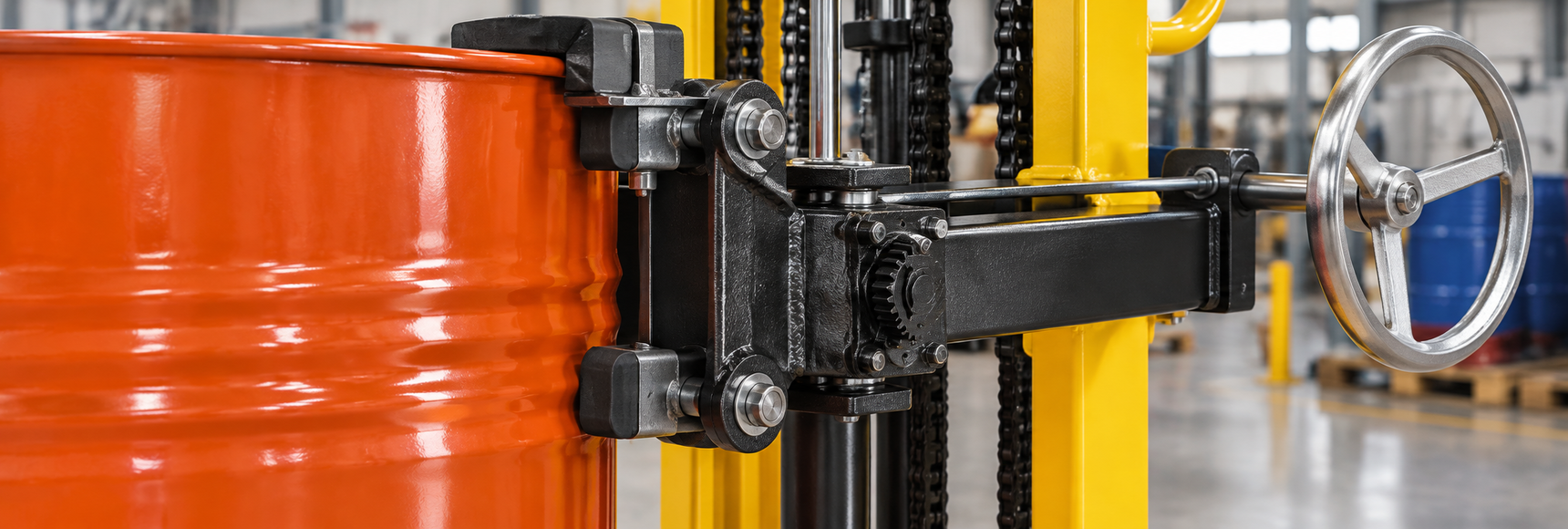
Determine whether your operation requires floor-to-rack vertical staging or precision decanting into production vats. If operators must meter liquid into mixers, choose a drum stacker equipped with a geared manual handwheel or motorized rotation system that allows smooth 180° to 360° rotational control.
3. Safe Working Load (SWL) and Counterweight Stability
High-density chemical formulations and metal-sludge waste frequently push gross drum weights beyond 300 kg. A heavy-duty drum lifting machine must feature at least a 350 kg certified safe working load rating and wide straddle outrigger legs. Wide-base legs enable the unit to surround standard containment skids or Euro pallets, retrieving drums directly from pallet corners without structural interference.
4. Lift Elevation and Racking Geometry
When staging drums onto vertical mezzanine decks, lifting containers over feed funnels, or loading onto flatbed trailers, mast travel height is vital. Lift elevations around 1600 mm provide the ideal operational balance, clearing standard low doorways while reaching intermediate rack tiers and processing hopper mouths easily.
From Manual Drum Dollies to Dedicated Drum Stackers
Selecting the appropriate equipment grade depends on production throughput and operational mechanics. While a basic two-wheel drum trolley offers low-cost horizontal transport over short distances, it cannot lift drums vertically, stage pallets, or tilt containers for controlled decanting.
To combine lifting, transport, and precise 360° pouring within a single footprint, the Paftar MS350V drum stacker and pourer provides an optimal industrial solution. Engineered with a robust 350 kg payload capacity and a 1600 mm mast elevation, the MS350V features an integrated geared rotation wheel and positive-locking belly clamp. This allows a single operator to lift, transport, and decant heavy drums into mixing vats without physical strain or rollover risks. To explore our comprehensive range of vertical lifting solutions for diverse industrial payloads, visit our dedicated stackers category.
Eliminating Hazards in Chemical and Liquid Handling
Attempting to transport hazardous, high-tonnage drums using improvised tools or manual force represents an unacceptable occupational safety risk. Investing in purpose-engineered drum handling machinery protects your personnel from musculoskeletal strain and crush injuries while eliminating chemical spills, stock losses, and regulatory non-compliance.
Whether configuring drum rotators for sanitary food ingredients or heavy-duty lifters for corrosive chemicals, connect with Paftar’s engineering specialists to find certified equipment tailored to your facility's operational workflow.