Choosing The Right Pallet Truck for Cold Storage
Learn how to select the right cold storage pallet truck for food and pharmaceutical cold chains. Compare stainless steel builds and low-temperature specs.
In the food processing, pharmaceutical, chemical, and frozen goods sectors, maintaining an unbroken cold chain depends heavily on seamless material handling within temperature-controlled environments. However, cold storage rooms and blast-freezing chambers operating at sub-zero temperatures (-20°C to -35°C) present exceptionally harsh operating conditions for standard industrial equipment. Material handling tools that perform reliably for years in ambient conditions can suffer rapid electrical and mechanical breakdowns when exposed to extreme freezing cycles and heavy condensation.
To preserve operational throughput and maintain strict sanitary compliance in refrigerated facilities, standard units should be bypassed in favor of a specialized cold storage pallet truck. Below are the critical technical parameters—from food safety certifications to low-temperature mechanical resilience—required to optimize your cold chain logistics.
4 Critical Criteria for Selecting a Cold Storage Pallet Truck
To ensure uninterrupted workflow and maximize equipment longevity across cold storage environments, carefully evaluate these technical factors:
1. Corrosion Resistance and Hygienic Chassis Design
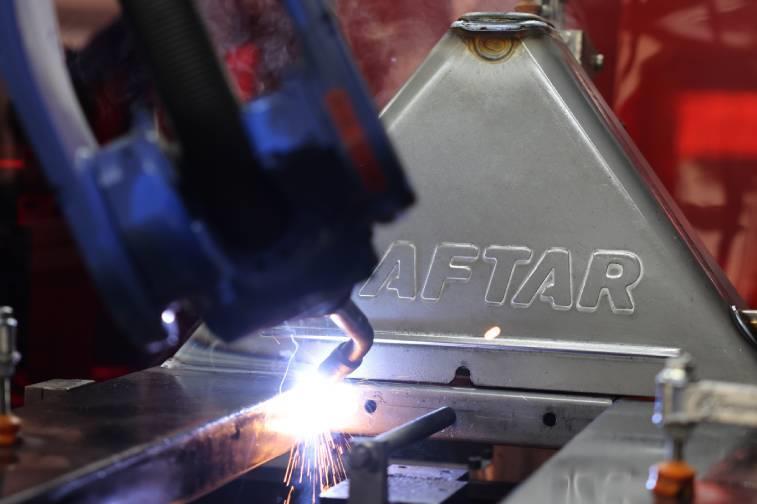
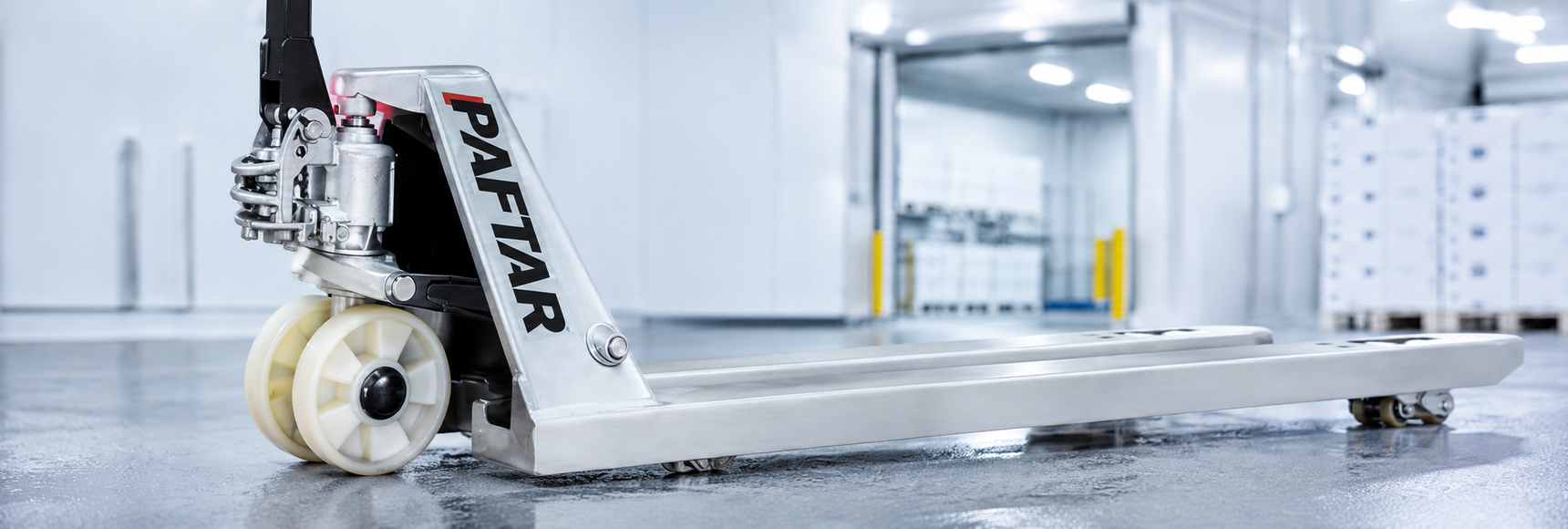
Frequent transitions between freezing chambers and ambient loading docks generate rapid condensation across the machine frame. This moisture causes standard powder-coated steel to rust quickly. To comply with rigorous hygiene and food safety standards (such as HACCP and FDA guidelines), facilities should utilize non-corrosive, easy-to-sanitize stainless steel pallet truck (inox) or hot-dip galvanized chassis designs.
2. Low-Temperature Hydraulic Fluids and Flexible Seals
Standard hydraulic oils thicken significantly at sub-zero temperatures, increasing pump resistance, slowing lowering cycles, and occasionally locking the lifting mechanism entirely. Equipment deployed in cold storage must utilize low-temperature synthetic hydraulic fluids with high viscosity indexes, paired with silicone or cold-resistant polymer seals that will not crack under freezing conditions.
3. High-Traction Wheel Compositions for Wet Floors
Cold storage floors are frequently damp, condensation-slick, or frosted. Standard hard nylon wheels lose grip and slip on slick surfaces, while standard soft rubber compounds can become brittle and degrade in deep freeze. Specialized high-grade polyurethane (PU) load rollers and drive wheels deliver optimal traction and wear resistance without marking polished or treated floors.
4. IP Ingress Protection and Battery Insulation
For motorized units, condensation poses a severe short-circuit risk. Electrical enclosures and control units should feature at least IP65 water- and dust-resistant sealing. Furthermore, to prevent traction batteries (lithium-ion or lead-acid) from losing discharge capacity in sub-zero air, select cold chain logistics equipment fitted with insulated battery compartments or integrated thermal heating jackets.
Manual vs. Electric: Finding the Right Match for Cold Rooms
Match your powertrain configuration to your facility's operational volume and ambient temperature ranges:
Manual Pallet Trucks: In deep-freeze blast rooms or extreme environments reaching -25°C, robust manual pallet truck models featuring all-stainless steel frames and low-temperature hydraulic fluid offer the most durable, low-maintenance solution free of sensitive electronics.
Battery-Powered Pallet Trucks: For high-throughput receiving docks and large-scale refrigerated distribution centers, utilizing insulated battery-powered pallet truck systems minimizes operator physical strain in low temperatures and accelerates cycle times.
Securing Cold Chain Continuity with Targeted Investments
Selecting the proper pallet truck for cold storage operations is not merely an equipment upgrade; it is a vital operational safeguard that protects product integrity, ensures cold chain compliance, and upholds hygiene standards. Deploying standard handling units ill-suited for low temperatures inevitably leads to frequent equipment downtime and costly supply chain bottlenecks.
Whether fulfilling strict food industry pallet truck sanitation guidelines or managing high-volume pharmaceutical cold storage lines, partner with Paftar to deploy reliable, moisture-resistant, and low-temperature material handling solutions tailored to your operational demands.