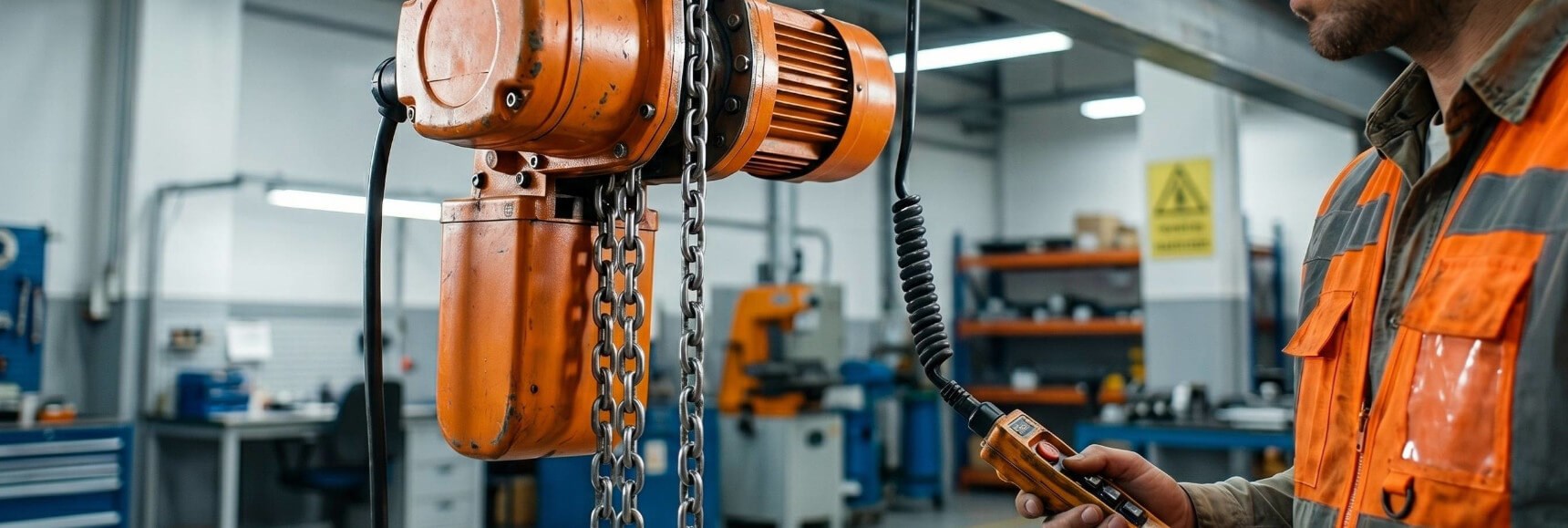
What is a Hoist? Types, Usage Areas, and Selection Guide
From industrial facilities to small workshops, one of the most fundamental pieces of equipment encountered wherever lifting is required is the hoist. This mechanical device allows you to lift tons of weight vertically by exerting very little force.
But how exactly does a hoist work, and which model is more suitable for your business? In this guide, you will find all the details you need to transport your heavy loads safely.
1. What Does a Hoist Do?
A hoist is a type of crane consisting of a gear wheel and chain (or rope) mechanism used to pull a load up or lower it down. The lifting principle is based on gaining force while sacrificing distance. They are generally offered in a wide range of load capacities starting from 250 kg and reaching up to 20-30 tons.
2. Differences Between Hoist Types
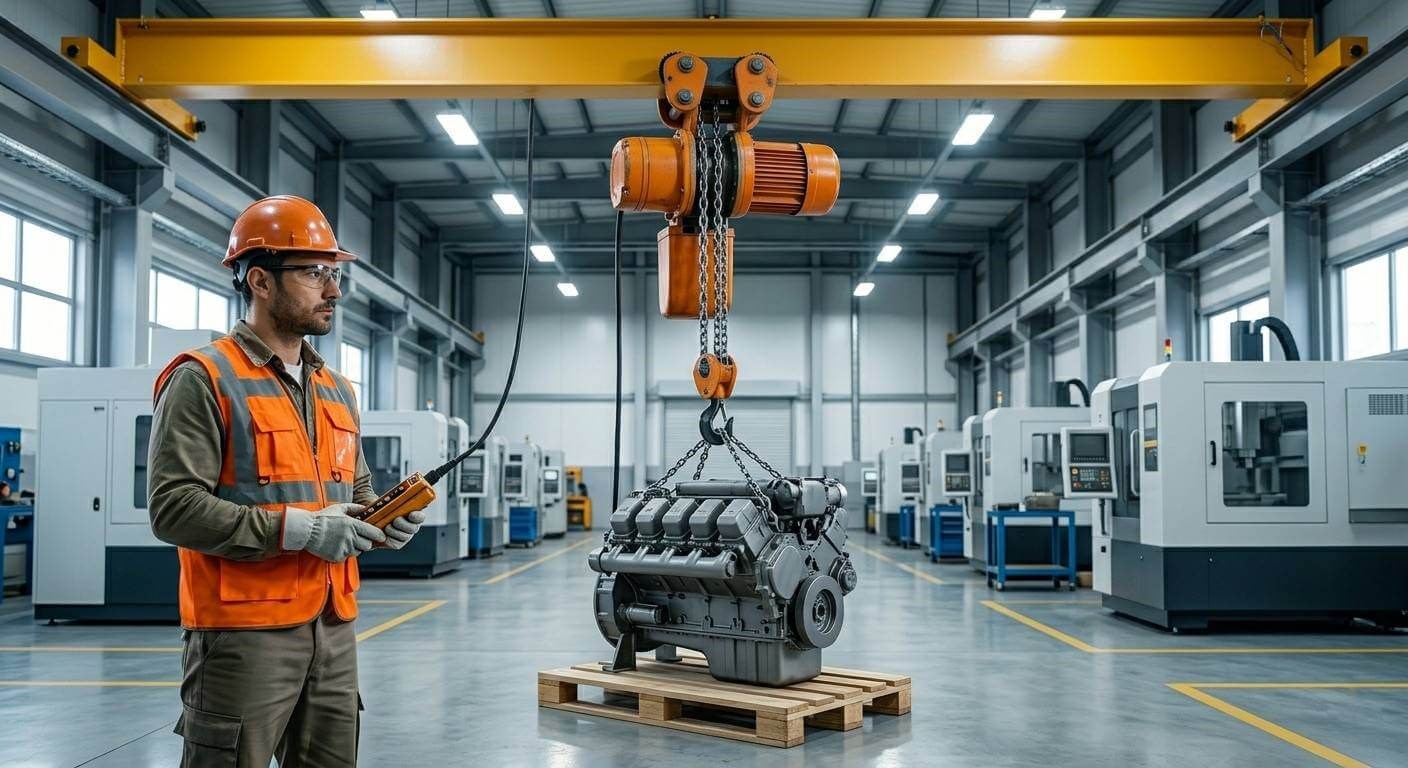
Depending on your intended use and the energy availability at your site, there are three main types of hoists:
1. Manual (Chain) Hoist
These models operate by the operator manually pulling a hand chain.
-
Advantage: Can be used in areas without electricity, is portable, and easy to maintain.
-
Usage: Ideal for non-intensive tasks where lifting at a lower speed is sufficient. For detailed information, you can examine our chain hoist options.
2. Electric Hoist
These are speed and efficiency-oriented systems where an electric motor takes over the lifting process.
-
Advantage: Eliminates operator fatigue and provides fast results at high altitudes.
-
Usage: Suitable for serial production lines, large factories, and heavy industry. For professional solutions, check out our electric chain hoist page.
3. Comparison Table: Which Hoist is for You?
|
Feature |
Manual Hoist |
Electric Hoist |
|
Power Source |
Manual Power |
Electric Motor |
|
Speed |
Slow |
Fast and Adjustable |
|
Usage Frequency |
Occasional / Infrequent |
Intensive / Continuous |
|
Cost |
Economical |
High Performance / Investment |
|
Mobility |
High (Portable) |
Fixed or Rail System |
4. How to Choose the Right Hoist? (Selection Guide)
When buying a hoist crane, you should focus on the technical requirements of your operation rather than just the price. Here are the critical questions to ask when choosing:
-
What is Your Maximum Load? Determine the weight of the heaviest load you will lift and always leave a safety margin.
-
What is the Lifting Height? How high does the load need to rise from the ground? The chain length must be suitable for this height.
-
How Many Times a Day Will It Be Used? If a continuous lifting process is performed, electric models with a high duty cycle should be preferred for motor longevity.
-
Do You Have a Power Source? Manual models are safer in outdoor sites where electrical connection is unavailable or risky.
Hoist prices vary according to the capacity of the selected equipment, lifting height, and motor power in electric models. Choosing certified products with after-sales support will lower your operating costs in the long run.